Case Study 03
Real-Time Bitcoin Anomaly Detection
Kinesis + Lambda pipeline with SNS alerting
The Problem
Cryptocurrency markets move fast and generate huge volumes of tick data — flagging anomalous price or volume behavior only matters if it happens in near real time. The goal was a pipeline that could ingest and process thousands of records a day with sub-second detection latency, without relying on brittle manual thresholds.
Approach
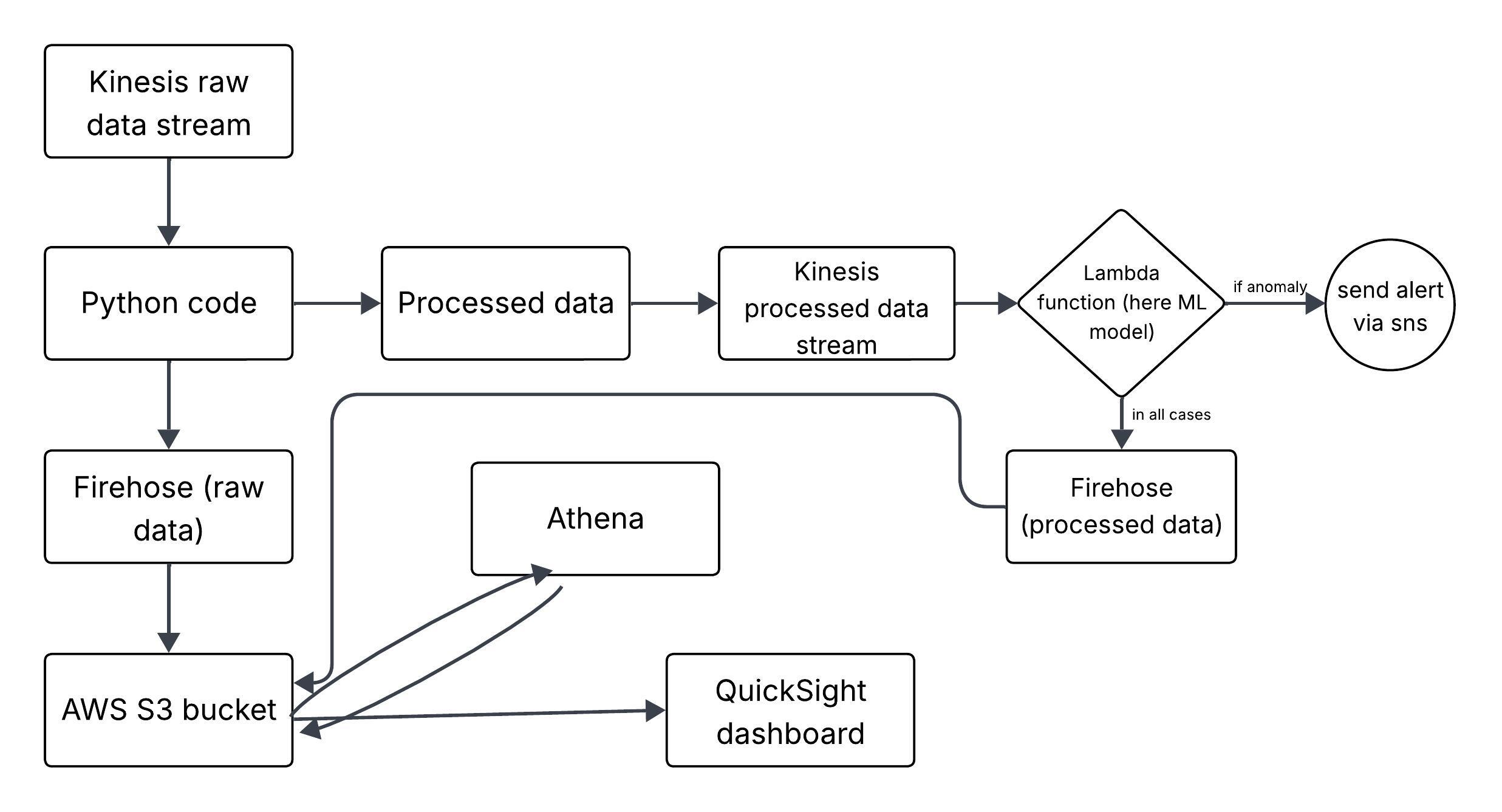
- 01Ingested raw data through a Kinesis data stream, with a Python processing layer computing derived features and pushing them onto a second, processed Kinesis stream.
- 02Ran a Lambda function on the processed stream that scores each record with a trained Isolation Forest model, firing an SNS alert immediately whenever an anomaly is flagged.
- 03Delivered both raw and processed data to S3 via separate Firehose streams, keeping a full historical record independent of the real-time alerting path.
- 04Queried the S3 data with Athena and built a QuickSight dashboard for real-time and historical visualization.
Visuals
Results
Processed 10K+ records/day with sub-second anomaly detection latency.
~30% precision improvement over statistical threshold baselines.
60% reduction in manual monitoring effort.
Reflection
Moving from a statistical threshold baseline to a learned Isolation Forest model was the single biggest improvement — thresholds are brittle and need constant re-tuning as market volatility shifts, while the model adapts to the shape of 'normal' data automatically.